
Yerba Buena/herba buena
Mentha arvensis Linn.
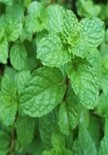
Description
Hierba buena is a prostrate, smooth , much-branched, usually purplish, strongly aromatic herb, with stems growing up to 40 centimeters long, with ultimate ascending terminal branches. Leaves are elliptic to oblong-ovate, 1.5 to 4 centimeters long, short-stalked with toothed margins, and rounded or blunt tipped. Flowers are hairy and purplish to bluish, borne in axillary head-like whorls. Calyx teeth are triangular or lanceolate and hairy; the corolla is also hairy.
Uses
- Carminative
- Antidote to stings of poisonous insects
- Neuralgic affections
- Renal and vesical calculus
- Diarrhea
- Fever
- Stomach aches
- Dysmenorrhea
- Diuresis
- Toothaches
- Headaches
- Dentifrice
Plant Part Used
Leaves and stems.
Distribution
Native of Europe.
Introduced by the Spaniards.
Widely cultivation to
Preparation
For toothaches:
- Boil the grinded and freshly picked yerbabuwena leaves in a pot filled with 2 glasses of water until the pot is only left with half filled of water. Keep the lid off the pot after bringing it to a boil.
- Let it cool completely and then strain it.
- Divide it into 2 portions. Drink 1 portion, and drink another 1 portion after 3-4 hours if the pain still persist.
- Dosage of minced sambong leaves based on patient’s age: 3 tablespoons (7-12 years old); 6 tablespoons (13 years old and above)
- Visit a health center and consult about your illness if the toothache still persists.
Headache:
- Compress or crush freshly picked leaves and use the extract in massaging the forehead and top of head.
- Consult with a health center if the headache still persists.