
Karabasa/kalabasa/squash
Cucurbita maxima Duchesne
Description
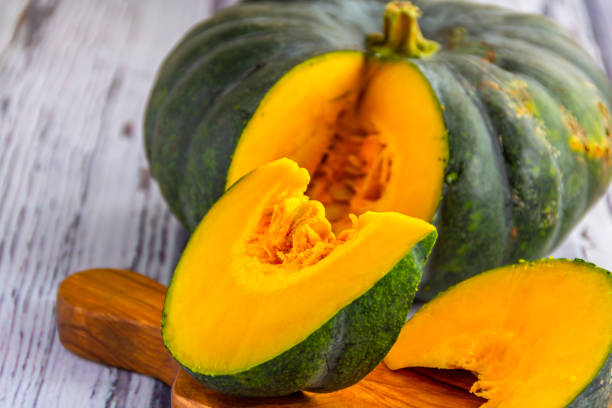
Kalabasa is a coarse, prostrate or climbing, annual, herbaceous vine, reaching a length of 4 meters or more. Leaves are hispid, rounded, 15 to 30 centimeters in diameter, heart-shaped at the base, shallowly 5-lobed, with finely toothed margins, and often mottled on the upper surface. Flowers are bell-shaped, erect, yellow and about 12 centimeters long, the corolla limb is about as wide, and 5-toothed. Fruit is large, variable in shape, fleshy, with a yellow pulp. Seeds are ovoid or oblong, compressed, and about 1.3 centimeters long.
Uses
- fruit pulp is often used as poultice for carbuncles, boils and ulcers.
- Dried pulp, in the form of confection, used as remedy for hemoptysis and hemorrhages from the pulmonary tract
- the fruit stalk in contact with the ripe gourd is cut, dried, and made into a paste and applied to venomous insect bites, especially centipedes.
- The fresh seeds, pulped or in emulsion, are used as anthelmintic. Seeds are eaten fresh to expel worms from the stomach. For tapeworms, seeds are given with sugar at bedtime, followed with a dose of castor oil in the morning.
- for stomach pain, as anti-inflammatory, antipyretic and anthelmintic
- for acute schistosomiasis.
- for kidney stones.
Plant Part Used
Fruits, seeds, stalk.
Distribution
- Naturalized.
- Widely cultivated throughout the Philippines as a vegetable produce.
- Occasionally found as an escape.
- Planted in all warm countries.
- Native to Argentina Northeast, Argentina Northwest, Bolivia.
Preparation
1. Anthelmintic (Deworming)
The most common traditional use of kalabasa is to expel intestinal worms, particularly tapeworms
- Preparation: Use fresh, raw, or dried seeds.
- Usage: Consume roughly 25-30 grams of seeds (approximately a handful) after fasting, or crush them into a paste and mix with honey or sugar.
- Administration: It is often followed by a laxative (such as castor oil) the next morning to expel the worms
2. Treatment for Venomous Bites
The stem part that directly connects to the ripe gourd is used as a traditional remedy for venomous insect bites (e.g., centipedes).
- Preparation: Cut the fruit stalk from a ripe squash, dry it, and grind it into a fine powder or paste.
- Usage: Apply the paste directly to the bite to alleviate pain and swelling
3. Nutritional Supplement (Immune Booster)
Kalabasa leaves, stems, and flowers are rich in iron, calcium, and vitamins A, B, and C
- Preparation: Young leaves (talbos ng kalabasa) can be boiled, steamed, or stir-fried.
- Usage: Consume as a vegetable dish to improve blood health and boost the immune system.
4. Skin Care
- Preparation: The flesh of the fruit can be mashed and used as a face mask.
- Usage: Applied to dry skin to help improve skin health
5. Other Potential Uses (Seeds)
- Tea: Studies indicate squash seeds can be processed into a powder and prepared as a healthy tea by mixing with hot water and honey
- Seed Oil: Used as a nerve tonic