
Pansit-pansitan
Peperomia pellucida (L.) Kunth
Description
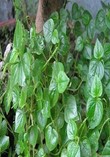
Pansit-pansitan is an erect, branched, annual herb, shallow rooted, reaching up to 40 centimeters high, with very succulent stems. Stems are round, often about 5 millimeters thick. Leaves are alternate, heart-shaped and turgid, as transparent and smooth as candle wax. Spikes are green, erect, very slender, 1 to 6 centimeters long. Tiny dot-like flowers scattered along solitary and leaf-opposed stalk (spike); naked; maturing gradually from the base to the tip; turning brown when ripe.
Uses
- Gout and arthritis
- Urinary tract infections (UTI)
- Cough
- Constipation
- Kidney diseases
- Diuretic
- Dysuria
- Boils
- Pustules
- Pimples
- Fever
- Hypertension
- Impotence
- Headache
Plant Part Used
Leaves and stems.
Distribution
An annual herb, favoring shady, damp and loose soil, grows in groups in nooks in the garden and yard, conspicuous in rocky parts of canals.
Preparation
Tips on how to control uric acid:
- Consult a doctor at a health center to diagnose your symptoms, and to know the medicine for gout including how to use pansit-pansitan to help in controlling your uric acid levels.
- The doctor may advise to eat 1 cup (not crammed) of leafy tops of pansit-pansitan thrice during the day (as a salad). Also, the doctor may advise to boil 1 1/2 glasses (or 3 cups), not crammed, of pansit-pansitan in 2 glasses of water until the water reduces to half (boil for around 15 minutes), and drink the 1/3 glass of boiled water thrice in the day after eating.