
Lagundi/dangla
Vitex negundo Linn.
Description
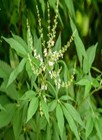
Lagundi is an erect, branched tree or shrub, 2 to 5 meters high. Leaves are usually 5-foliate, rarely with 3 leaflets only, and palmately arranged. Leaflets are lanceolate, entire, 4 to 10 centimeters long, slightly hairy beneath, and pointed at both ends, the middle leaflets being larger than the others, and distinctly stalked. Flowers are numerous, blue to lavender, 6 to 7 millimeters long, borne in terminal inflorescences (panicles) 10 to 20 centimeters long. Calyx is hairy, and 5-toothed. Corolla is densely hairy in the throat, and the middle lobe of the lower lip is longest. Fruit is a succulent drupe, globose, black when ripe, about 4 millimeters in diameter.
Uses
- Used externally for cleaning ulcers/wounds
- Lactagogue
- Emmenagogue
- Colic/abdominal pain
- Fever
- Rheumatitis
- Headache
- Toothache
- Cough
- Asthma
- Dysentery
- Skin diseases
Plant Part Used
Leaves, bark, roots and seeds
Distribution
Widely distributed in the Philippines, also occurs in tropical East Africa, Madagascar, India to Japan, and southward through Malaya to western Polynesia
Preparation
- Boil half cup of chopped fresh or dried leaves in 2 cups of water for 10 to 15 minutes. Drink half cup three times a day.
- For skin diseases or disorders, apply the decoction of leaves and roots directly on skin.
- The root is specially good for treating dyspepsia, worms, boils, colic and rheumatism