
Kamatis/tomato
Lycopersicon esculentum Mill.
Description
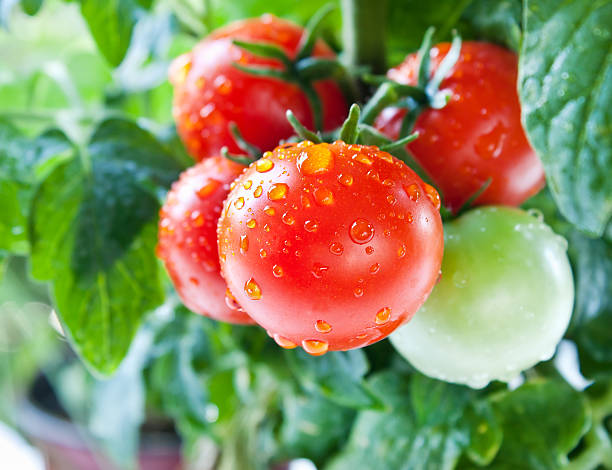
Kamatis is a hairy annual herb, typically growing 1 to 3 meters in height, with ascending or spreading hairy and branched stems. Stem is weak, often sprawling over the ground or vines over other plants. Leaves are pinnate and alternate, oblong-ovate, 10 to 40 centimeters long. Leaflets are irregular and toothed or lobed. Inflorescence is racemose or cymose, 5 to 8 centimeters long, and few flowered. Flowers are yellow, 1 to 1.5 centimeters long. Fruit is variable in shape; in the wild and naturalized forms it is rounded or pear-shaped; 1 to 1.5 centimeters in diameter; in the commonly cultivated form, the fruit is rounded and compressed, lobed, 4 to 10 centimeters wide, red when ripe, smooth, fleshy, juicy, subacid, containing numerous seeds.
Uses
- Regular consumption supports heart health by lowering blood pressure and cholesterol, aids in cancer prevention, improves vision, and promotes skin health through protection against UV damage.
- Pulp and juice are mild aperient.
- Juice used for asthma and bronchitis.
- Used to stimulate a torpid liver.
- Used for anotic dyspepsia.
- Used for biliousness.
- Used in the treatment of high blood pressure.
- Used as gastric tonic and to improve hematopoeisis.
- Pulp and juice are mild aperient.
- Juice used for asthma and bronchitis.
- Used to stimulate a torpid liver.
- Used for anotic dyspepsia.
- Used for biliousness.
- Used in the treatment of high blood pressure.
- Used as gastric tonic and to improve hematopoeisis.
Plant Part Used
fruit
Distribution
- found throughout the Philippines in its original form
- extensively cultivated, grown in gardens and farms as vegetable
- cultivated worldwide
Preparation
- Raw/Salad Prep: Wash thoroughly, remove the stem, and slice or dice as needed.
- Roasting: preheat oven to 400F(200C), halve the tomatoes, drizzle with olive oil, and season with salt and pepper