
Kabatiti/patola/sponge gourd
Luffa acutangula (L.) Roxb.
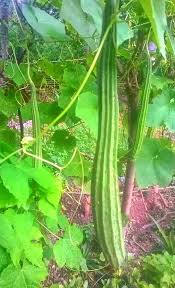
Description
Patola, a vegetable, is a coarse, annual, herbaceous vine. Leaves are subrounded-ovate, 10 to 20 centimeters long, shallowly five-lobed, and heart-shaped at the base. Female flowers are pedicelled, occurring singly in the axils of the leaves. Male flowers are yellow, 2 centimeters long, borne in axillary racemes. Calyx lobes are lanceolate and pointed. Fruit is oblong-oblanceolate, 20 to 25 centimeters long, about 5 centimeters in diameter, green, and characterized by 10 prominent, longitudinal sharp angles. Seeds are numerous and close-packed.
Uses
- Unripe fruit is a good source of calcium, iron and phosphorus.
- Fruit considered a fair source of vitamin B.
- for amenorrhea.
- for hemorrhoids.
- used externally for sores and various animal bites.
- used as purgative and emetic
- used to treat jaundice.
- used for uremia and amenorrhea
- used for hemorrhoids, splenitis, leprosy, conjunctivitis in children
- seeds eaten to expel intestinal worms; leaf juice applied to eczema
- Seed used as insecticidal
- Dried fruit powder used to prevent premature graying of the hair
- Root of the plant used in dropsy and as laxative
Plant Part Used
Leaves, fruit, seed oil
Distribution
- Introduced; naturalized.
- Cultivated for its edible fruit.
- In cultivation in the Old World Tropics.
- Native to Assam, Bangladesh, East Himalaya, India, Pakistan, Sri Lanka, West Himalaya
Preparation
1. Leaf Preparations (For Skin Issues, Fever, and Jaundice):
- Poultice for Skin Ailments: Crush fresh leaves and apply directly to skin rashes, boils, eczema, or insect bites to reduce inflammation.
- Leaf Juice/Extract: Squeeze fresh, washed leaves to obtain juice.
External Use: Applied to the eyes for conjunctivitis.
Internal Use: Used as a tonic, febrifuge (fever reducer), and for liver health (jaundice), often taken in small doses.
- Decoction (Tea): Boil fresh or dried leaves in water. This tea is used as a remedy for coughs, asthma, and to aid in detoxification.
2. Fruit preparations (For digestion and skin)
- Fresh Juice: Juice the young fruit to help manage high blood sugar, reduce stomach acidity, or as a liver tonic.
- Culinary Medicine: Eating young patola in soup is commonly recommended to aid in digestion, treat constipation, and provide vitamins A and C.
- Topical Application: The fibrous pulp of the ripe fruit can be used as a sponge to exfoliate and soothe skin
3. Seed and Root Preparations
- Seeds: Used as a purgative or laxative to expel intestinal worms.
- Roots: A decoction of the roots is sometimes used as a laxative, but caution is advised due to potential toxicity