
Baraniw/balanoy
Ocimum basilicum L.
Description
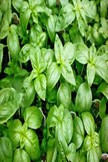
Balanoy is an erect, branched branched, smooth, somewhat hairy, and very aromatic undershrub, growing 0.5 to 1.5 meters high. Leaves are simple, opposite, ovate to oblong-ovate, entire or slightly toothed, with acute tips and glandular spots on the lower surface. Flowers are pink or purplish and borne in racemes which are 8 to 15 centimeters long. Calyx of the individual flower or floret is strongly reflexed, the upper lobe round, the lower two narrowly lanceolate and acuminate, and the lateral ones ovate. Corolla bilabiate, exerted, and upper lip broader, subequally 4-fid, the lower lip entire. Petals pink or purplish, stamens exserted. Fruits are nutlets, smooth or somewhat rugose.
Uses
- The leafy and flowering tops are used as condiment; eaten sparingly in salads.
- Seeds are sometimes eaten.
- Cough: Expectorant properties - Take infusion or decoction of herb (9-15 gm of dried herb) or tops as tea.
- Leaf juice helpful for expectoration of mucus.
- Decoction of leaves also used for hiccups, vomiting and nausea.
- Gas pains: Decoction of herb as tea helps to expel wind from bowels.
- Ear afflictions: Juice of leaves dropped in ears for earache and dullness of hearing.
- Snake bites: Crush fresh plant and poultice the bitten wound.
- Gonorrhea, using a decoction of the roots and leaves of plants.
- Decoction of leaves used as a wash for ulcers.
- Used for external contusions.
- Used in baths for rheumatic pains.
- For ringworm and insect bites, apply juice of crushed leaves.
- Decoction of herb as wash for skin ulcers.
- For delayed menstruation: take the juice of the leaves with water.
- Seeds are used in treatment of several eye diseases; to soothe pain and inflammation.
- Toothache: Wet small piece of cotton with juice of crushed leaves and insert into tooth cavity.
- Decoction of seeds used to decrease postpartum pains; the seeds are mucilaginous.
- Poultice of seeds used for buccal sores.
- Decoction of seeds also used for constipation.
- Acne: Infusion of 3 tsp of dried leaves in 1 cup of boiling water for 20-30 minutes.
- Apply externally or drink decoction of tea or infusion 3 times daily.
- Malays used the leaves as remedy for coughs.
- Decoction of leaves used after childbirth; juice taken for delayed menses.
- Seeds given as infusion for gonorrhea, diarrhea and chronic dysentery.
- Seeds used as aphrodisiac.
- Seeds, washed and pounded, used in poultices for sores and sinuses; also used internally for habitual constipation and internal hemorrhoids.
Plant Part Used
Leaves and seeds. Mature leaves are harvested 2–3 months after planting, leaving branches to produce seeds for the next season. Leaves are air-dried until brittle when crushed, then stored in amber bottles in a cool, dry place.
Distribution
Found throughout the Philippines in settled areas at low and medium altitudes.
Often spontaneous in open waste places.
Preparation
- Dizziness: crush enough fresh leaves with your fingers and sniff them.
- Cough: As decoction boil eight tablespoons of fresh leaves in two glasses of water for 15 minutes or until the liquid is reduced to half. Divide the decoction into eight parts and take one part, three times a day.