
Aba/biga
Alocasia macrorrhizos (L.) G.Don
Description
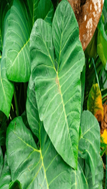
Biga is a coarse and erect plant with a stout trunk, growing up to 2 meters high. Leaves are very large, broadly ovate, the larger ones up to 1.5 meters long, with slightly undulate margins, a pointed apex and a deeply cordate base, not at all peltate. Petioles are long and very stout. Spathes are peduncled, with the tube 4 to 5 centimeters long, the blade yellowish to yellowish-green up to 23 centimeters long and 9 centimeters wide when spread, slightly mottled with purple inside. Pistillate part of the spadix is 3 to 4 centimeters long, 1.5 centimeters thick, contracted above. Fertile part of the male inflorescence is about 6 centimeters long, the appendage about 15 centimeters long. Berries are globose or ovoid, fleshy, and red when mature.
Uses
- Stems and corms are edible; used as food during scarce times.
- Widely cultivated and eaten as vegetable
- Leaves and corms used for furuncles, impetigo and snake bites
- Ground petioles in near-decayed state are placed in cloth and heated in coals, used for toothaches.
- Decoction of rhizomes used for abdominal pains and vomiting.
- Acrid juice used for stings of giant nettles (Laportea).
- Tubers used for influenza, fever, malaria, diarrhea, typhoid fever, tuberculosis, headaches.
- Rootstock used for inflammations and diseases of the abdomen and spleen.
- Leaf and stem decoction used as bath in treatment of pruritic skin conditions and burns.
- Underground stem part used for gout and rheumatism.
- Used in the treatment of diabetes; stem juice applied to prevent edema, pain, and bleeding from cuts and wounds. Whole plant is used for pus in the ears, jaundice, and constipation.
- Chopped roots and leaves applied to painful joints.
- Used for cancer treatment
- Used to promote urination, heal boils, and treat rheumatism
Plant Part Used
Stems, leave, rhizomes
Distribution
- Wild in clearings and secondary forests at low and medium altitudes throughout the Philippines.
- Commonly cultivated as an ornamental here and in other tropical countries
- Cultivated for its starchy stem tubers. .
- Also occurs in India to Malaya.
Preparation
- For boils and sores: Macerated (pounded and soaked) leaves can be applied as a poultice to burst boils and infected sores. The juice of the leaves can also be applied directly to boils.
- For rheumatism: Heated tubers can be applied to painful rheumatic joints.
- For toothaches: The juice of the leaves can be applied to the aching tooth
- For internal hemorrhages: The leaf juice can be used internally.
- For earaches and otorrhea: The juice of the petioles (leaf stalks) can be used
- For alopecia (hair loss): The juice of the corm (tuber) may be used.
- As a laxative: The leaves can be used internally as a laxative