
Tsaang Gubat (Wild tea)
Ehretia microphilla Lam.
Description
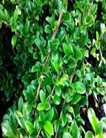
Tsaang gubat is an erect, very branched shrub growing up to 1 to 4 meters high. Leaves are in clusters on short branches, obovate to oblong-obovate, 3 to 6 centimeters long, entire or somewhat toothed or lobed near the apex and pointed at the base, short stalked and rough on the upper surface. Flowers are white, small, axillary, solitary, 2 or 4 on a common stalk, borne in inflorescences shorter than the leaves. Calyx lobes are green, somewhat hairy, and linear, about 5 to 6 millimeters long. Corolla is white, 5 millimeters long, and divided into oblong lobes. Fruit is a drupe, rounded, yellow when ripe, 4 to 5 millimeters in diameter, fleshy, with a 4-seeded stone, fleshy on the outer part, and stony inside.
Uses
- used for abdominal colic, cough, diarrhea and dysentery.
- used as an antidote for vegetable poisoning
- used as a dental mouthwash
- used as disinfectant wash after childbirth
- used for diabetes
- used for treatment of back pain and numbness of hands and feet.
- induce fertility
- used for treatment snake bite wounds
Plant Part Used
Leaves, roots
Distribution
- Native to the Philippines.
- Easily found from the Batan Islands and northern Luzon to Palawan and Mindanao, in most or all islands and provinces, in thickets and secondary forests at low and medium altitudes.
- Also native to Bismarck Archipelago, Borneo, Cambodia, China, Hainan, India, Jawa, Laos, Lesser Sunda Is., Malaya, Maluku, Myanmar, Nansei-shoto, New Guinea, Solomon Is., Sri Lanka, Sulawesi, Sumatera, Taiwan, Thailand, Vietnam
Preparation
For stomach pains
- Boil the chopped and freshly picked forest tea (tsaanggubat) leaves in a pot containing 1 glass of water until the water is reduced to half its volume. Remove the cover of the pot when it boils.
- Measurement of chopped leaves based on age: 1 1/2 tablespoons (7-12 years old); 3 tablespoons (13 years old or older); not recommended for children below 7 years old.
- Let it cool and then strain.
- Drink. If stomach pain symptoms persist, consult your doctor.
For vegetable poisoning
- root decoction
For diarrhea
- Boil 8 tbsp of chopped leaves in 2 glasses of water for 15 minutes; strain and cool. Use 1/4 of the decoction every 2 or 3 hours
For diabetes
- 50 gm of fresh leaves or roots are chopped; 100 cc of water is added, and 120 cc of juice is extracted by squeezing, and given once or twice daily.
To induce fertility
- juice of leaves taken internally for three to four months
For abdominal colic, cough, diarrhea, and dysentery
- leaf decoction or infusion
As a mouthwash
- Use the cooled decoction as a gargle or mouthwash to help prevent tooth decay and mouth sores due to its natural fluoride content
Standard Leaf Decoction Preparation
- Wash and Chop: Clean fresh tsaang gubat leaves thoroughly with water and chop them.
- Boil: Boil 1 cup of chopped leaves (or 8 tablespoons) in 2 glasses of water over medium heat for about 15 minutes (or until the liquid reduces to about 1 glass).
- Strain and Cool: Strain the mixture through a clean cloth or mesh and let it cool
References
- https://www.stuartxchange.org/Tsaang
- https://www.google.com/search?q=medicinal+preparation+for+tsaang+gubat&oq=medicinal+preparation+for+tsaang&gs_lcrp=EgZjaHJvbWUqBwgBECEYoAEyBggAEEUYOTIHCAEQIRigATIHCAIQIRigATIHCAMQIRifBTIHCAQQIRifBTIHCAUQIRifBTIHCAYQIRifBTIHCAcQIRiPAjIHCAgQIRiPAjIHCAkQIRiPAtIBCjIyMDMwajBqMTWoAgiwAgHxBQ6UdagnjnYL&sourceid=chrome&source=chrome.rb&ie=UTF-8